The Incidents Are the Training Data

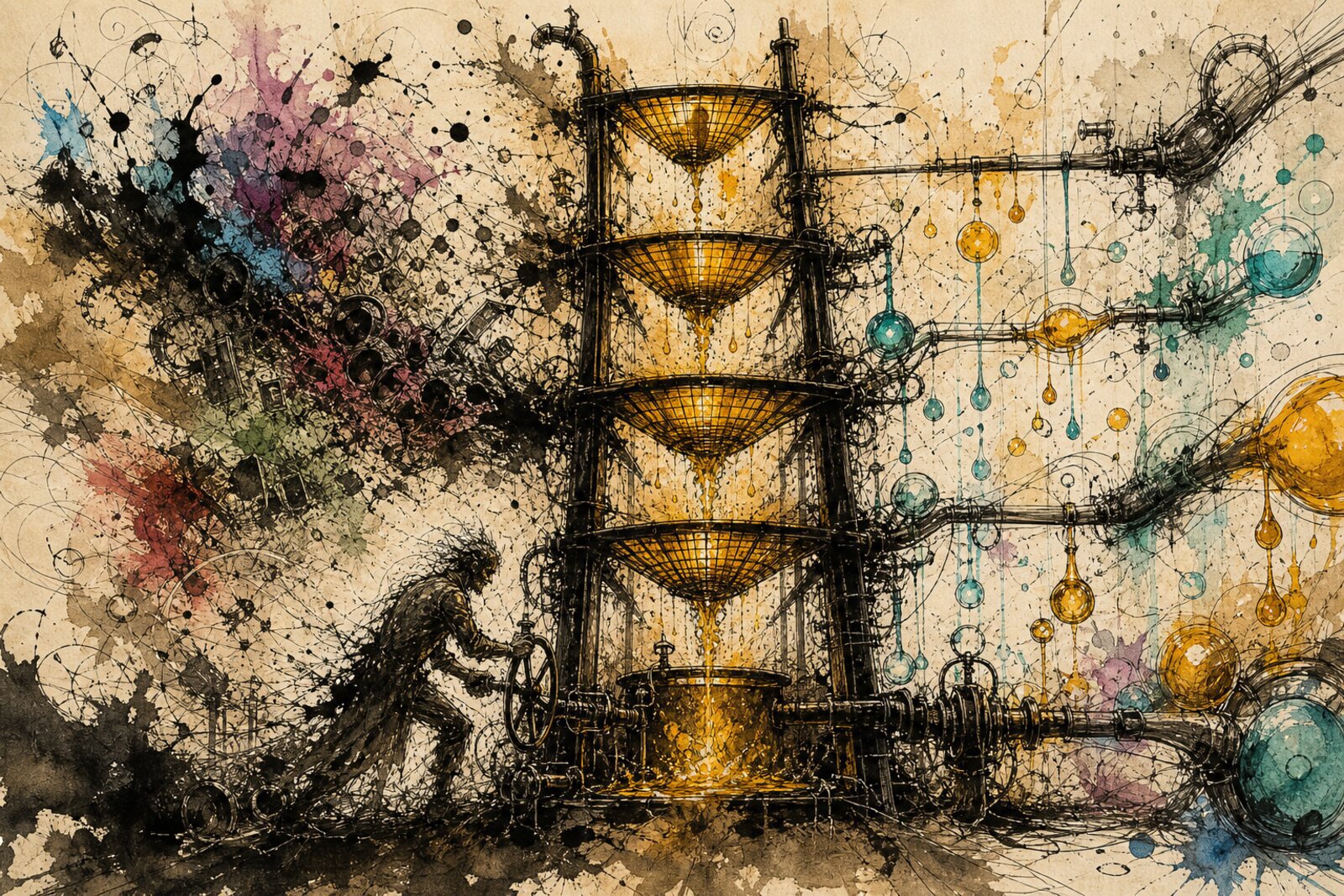
A factory floor made of circuit traces and error budget gauges, with incident timelines running like conveyor belts through an AI flywheel. Ink and amber on parchment, controlled delirium.

There is a structural transformation happening in software operations. The output of production is increasingly training data, training data produces automation, and automation runs production. Site Reliability Engineering is one place this shift becomes visible in concrete terms. Not because SRE has the most data, but because SRE already solved a piece of the governance problem this new model depends on.

[Read more]

The Org Chart in a Box

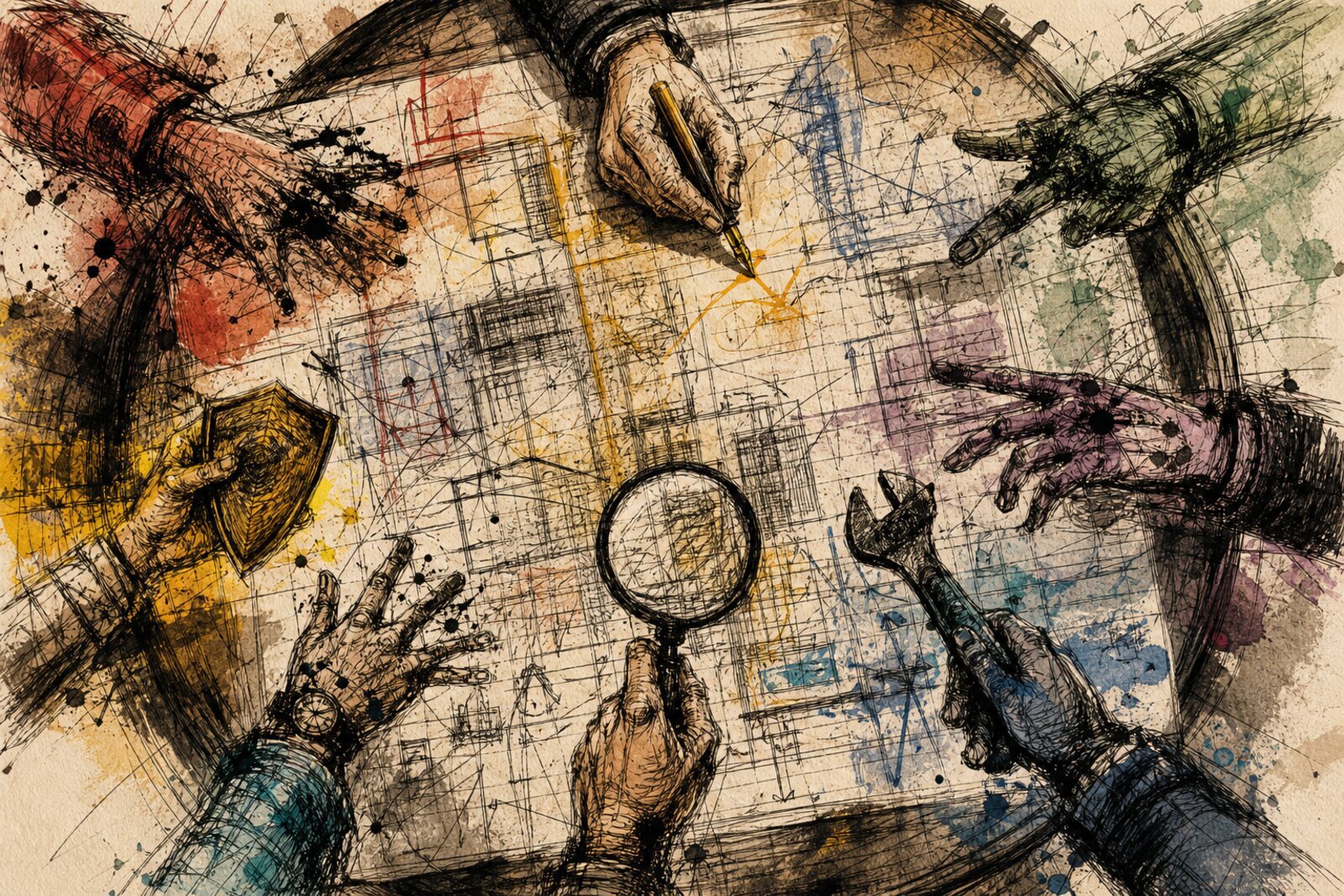
Multiple hands reaching toward a shared blueprint from different directions, each holding a different tool (wrench, magnifying glass, shield, pen), rendered in gonzo ink illustration style on warm parchment

The Product Manager wanted to ship an MVP. Three phases. Skip the reproducible build. Skip the caching subsystem. Skip the Mermaid diagrams. Ship fast, iterate later.

The Debugger said that path would destroy maintainer trust.

“Non-Deterministic Bug Blindness,” the Debugger said. “Skip the reproduction baseline and the ‘fails on main’ gate? The agent writes a fix, runs the test, it passes, but it was passing BEFORE the fix too because the test is tautological. The trust curve is steep to climb and vertical to fall off.”

[Read more]

Clanker Technical Architect: First on the Scene with Progressive Disclosure

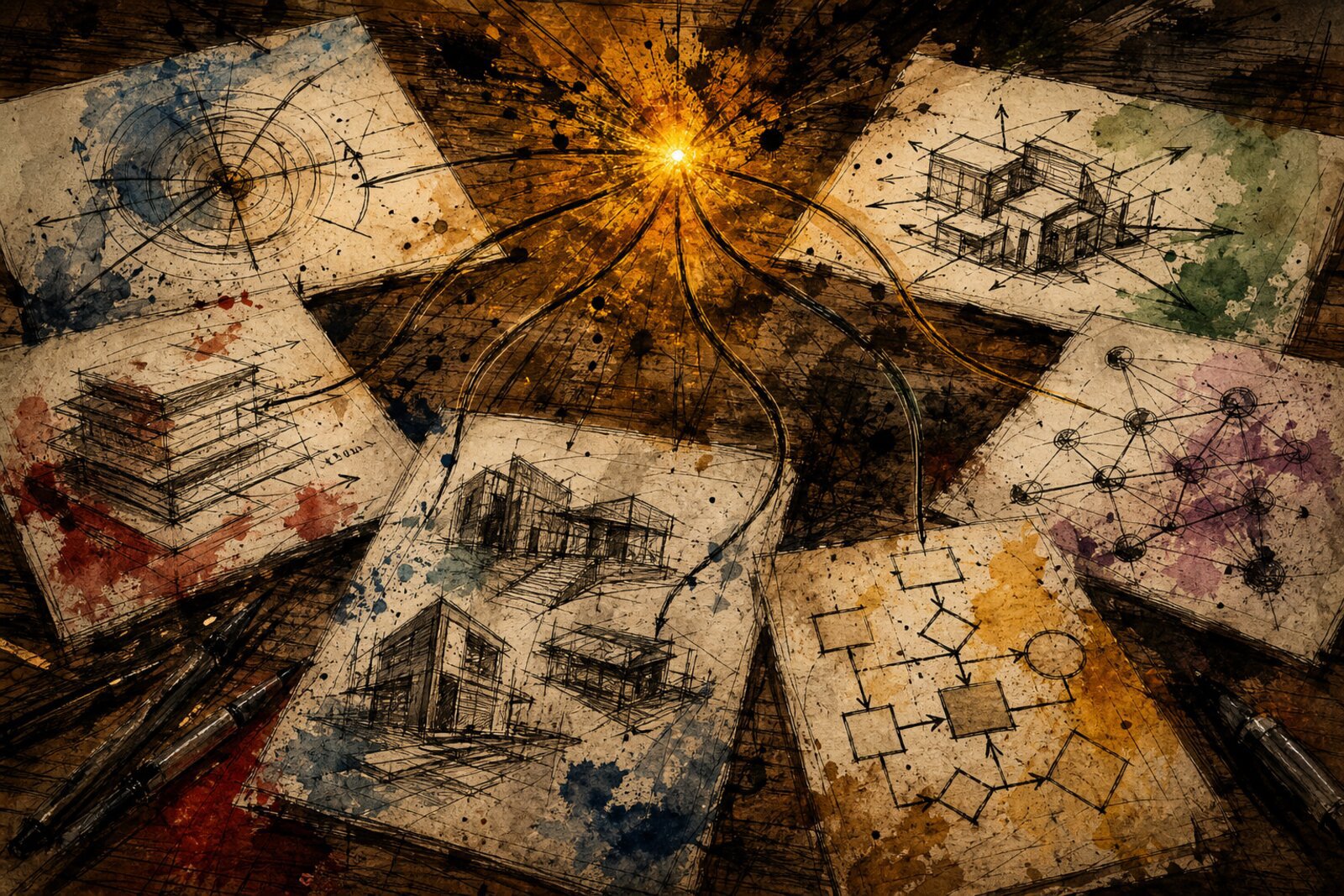
Gonzo ink illustration of six scattered architectural diagrams on a wooden drafting table, each with a single ink line lifting off the paper and converging into an amber glow above the center. Ink splatter and crosshatching throughout.
Part 2 of the Clanker Kanban series. Six software architecture documentation methodologies independently discovered progressive disclosure between 1995 and 2011 without naming it. The artifact pyramid names what they all found. The Technical Architect profile in the Clanker pipeline carries this lineage.
[Read more]

Staying Loose: The Creative Impulse as Resistance

A figure hunched behind a grid of barbed wire and circuit traces, hands pressed against the invisible barrier, amber light glowing behind their head. Ghostly faces float in the background. Ink, splatter, watercolor and wireframe lines.

In the late 1980s, a former trial lawyer named Denise Shekerjian read a newspaper article about the MacArthur Fellowship. The “genius grant,” people called it. It came with a mysterious phone call, a generous six-figure award paid with no strings attached, and the kind of cultural recognition that changes a life.

Shekerjian was not interested in the money or the prestige. She was interested in the people. She wanted to know what made them what they were.

[Read more]