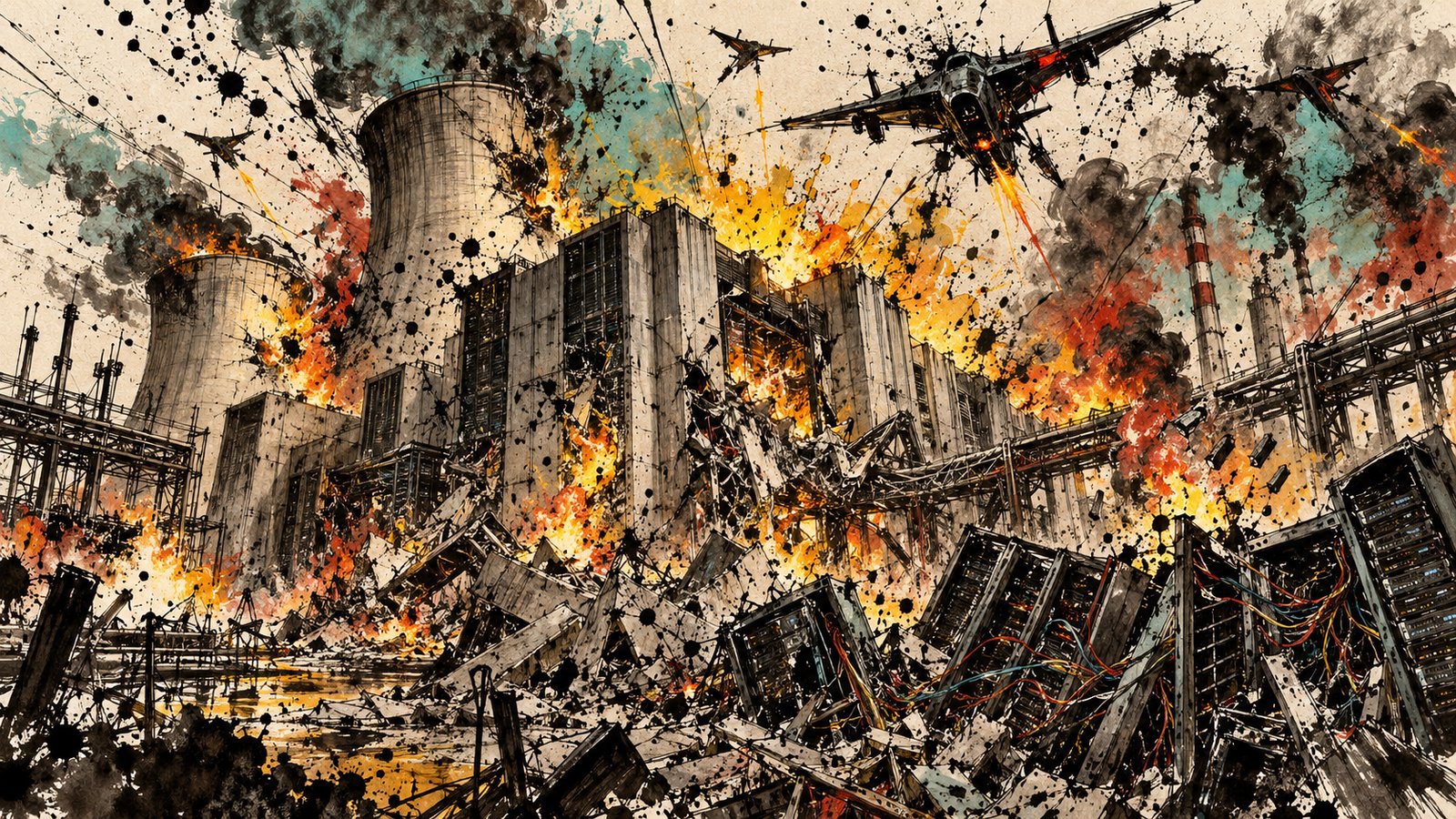
Between October 8 and 11, 2026, Ukrainian strikes hit three data centers operated by Yandex, one of Russia’s biggest tech companies. These were physical server halls, concrete, generators, and cooling towers, the actual bricks and mortar behind search, apps, and cloud hosting. Yandex admitted the damage was severe, shut the facilities down, and gave no timeline for restoring the equipment.
Social media did what it always does: it celebrated a clean moral victory. People cheered reports that Russian bots were offline, imagining a few blown-up buildings had miraculously scrubbed the internet of manufactured outrage. On October 12, President Volodymyr Zelenskyy pointed to fewer bots and less hate on major platforms. Ukraine’s Center for Countering Disinformation reported that automated propaganda activity dropped by roughly half for about twelve hours before operators adapted and traffic climbed back.
It is easy to see why people cheered. But if you work in infrastructure, you took away a much darker lesson: physical attacks on server buildings work, they scramble digital life immediately, and our adversaries just watched it happen.
Our own exposure is far deeper than we want to admit. Look at what a normal Tuesday requires from distant computers in Northern Virginia or Oregon: work email, grocery registers, school portals, flight bookings, prescription refills. We see different brand names and tap different app icons, but underneath the glass, the plumbing runs back to the same consolidated server farms.
Before we finish cheering, we should ask how much of our own routine would survive if that plumbing went dark. Nobody needs to destroy every computer in North America to break us; knocking out enough ordinary services to make daily life unreliable would do the job.
We have already seen the smaller version#
In March 2021, fire gutted an OVHcloud campus in Strasbourg. One data center was destroyed, another damaged, and the rest shut down. Netcraft counted about 3.6 million websites across 464,000 domains knocked offline, from government agencies to banks and online retailers.
Game developers tend to describe hardware failure without the marketing spin. Facepunch, the studio behind Rust, lost 25 European servers in the blaze, along with the backups they had kept in the exact same building. They brought up replacement servers elsewhere, but the player data was gone for good. Meanwhile, OVH’s recovery updates dragged on for more than six weeks just trying to restore basic customer services.
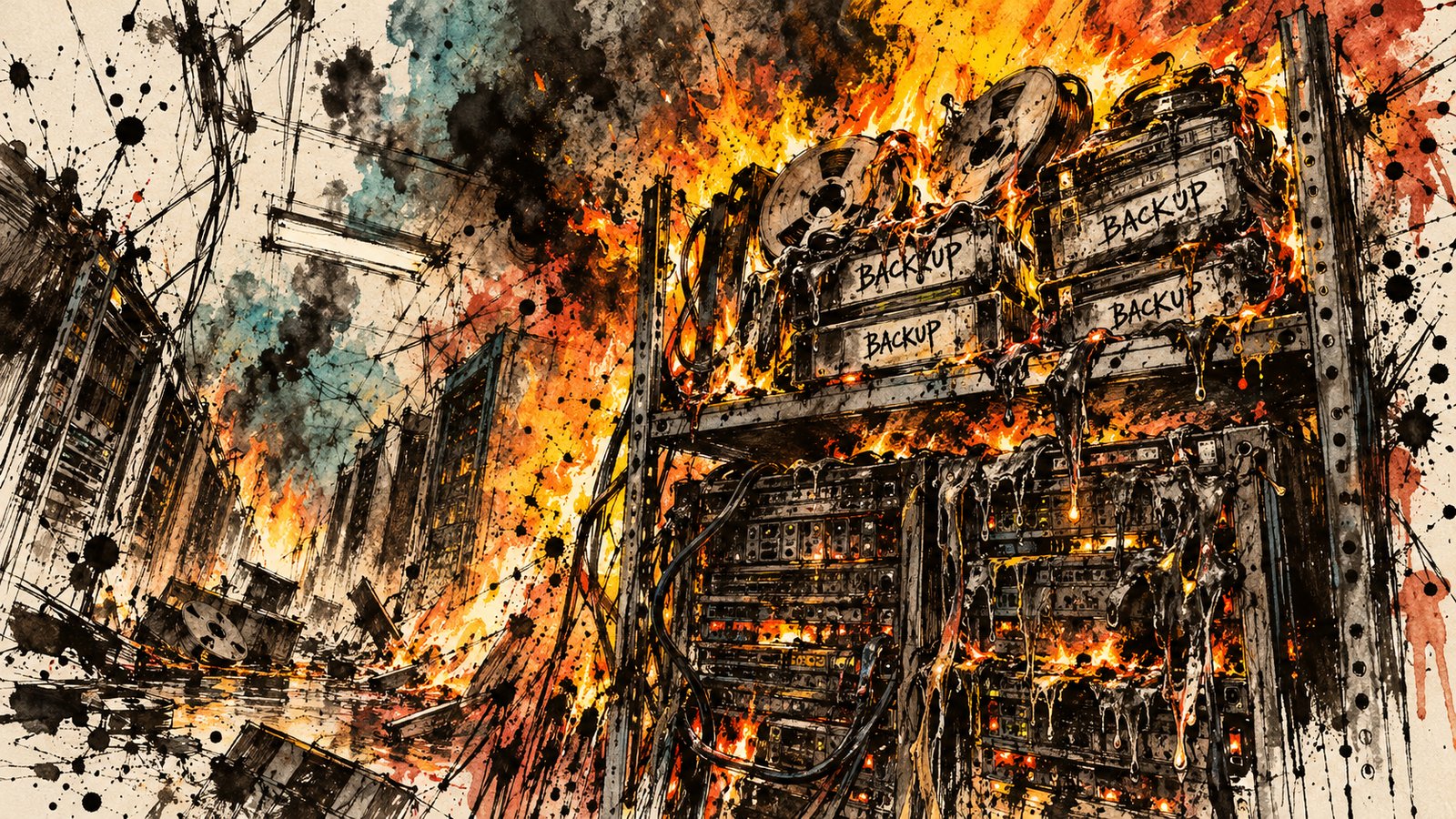
The fragility shows up in routine accidents, too. In June 2012, a severe storm knocked out primary power and generator controls at an Amazon Web Services data center in Northern Virginia. Customer virtual machines in other availability zones were technically running, but the regional control plane collapsed; customers could not spin up replacements or manage resources across the entire region. AWS re-engineered those systems, but the geography has not changed: us-east-1 is an AWS region made up of multiple availability zones, and each zone is a cluster of physical facilities.
How many businesses have actually bought, configured, and routinely tested real multi-region failover?
In my experience running engineering teams, the answer is almost none. Startups and mid-market companies talk a big game about redundancy, but an extended regional outage would crush them. Even AWS’s own guidance warns that hidden dependencies can defeat multi-region recovery: your application can be deployed across three regions, but if a centralized identity or configuration service fails, none of them matter.
The disruption reaches beyond your browser#
When remote systems break, the damage does not stay in the cloud. It lands on people trying to do their jobs.
During the October 2025 AWS outage, Academy District 20 in Colorado lost access to its student information systems, parent messaging, and classroom portals. A district spokesperson had to reassure families that kids could still get home safely on the buses. The school day kept moving, but the digital coordination was gone.
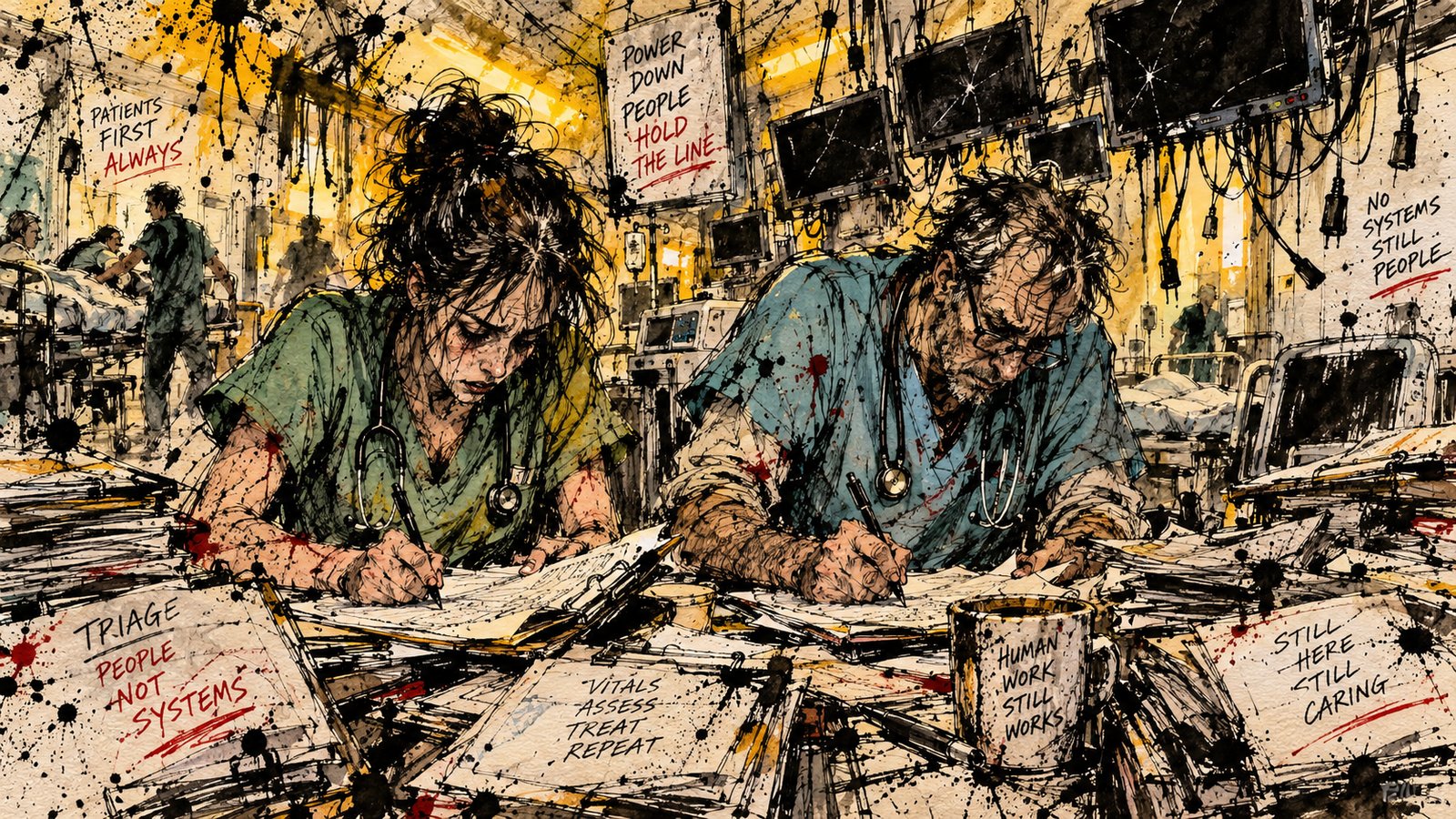
In hospitals, things turn dangerous. In July 2022, a London heatwave knocked out two nearby data centers that Guy’s and St Thomas’ ran to back each other up. Clinical computer systems vanished. Doctors and nurses scrambled for paper charts, diverted ambulances, and postponed surgeries, including a pancreas transplant. Paper kept care going, but staff were exhausted and stressed, flying blind without patient histories.
Emergency services have the same weak spots. In 2014, a software bug at a centralized database in Colorado blocked more than 6,600 emergency 911 calls from reaching dispatchers across seven states, documented in an FCC technical report.
Portland avoided disaster because it prepared for the worst. When CrowdStrike pushed its bad update in July 2024 and bricked computerized dispatch, 911 operators immediately went to manual paper call-taking. The city reported that 911 callers never lost the ability to reach help.
In supply chains, recovery is grueling. Food distributor UNFI was hit by a cyberattack in June 2025 and took critical systems offline, relying on warehouse workers using manual workarounds while recovery statements tracked weeks of phased restoration.
Airlines show how fast operations collapse. Delta canceled 2,300 flights over three days after an equipment fire in 2016. When CrowdStrike hit in 2024, its SEC filing recorded roughly 7,000 cancellations over five days. The planes were fine, the runways were open, but the crew-scheduling engines were toast.
Air traffic control has the same dependencies. In January 2023, the FAA grounded flights nationwide for two hours when NOTAM failed. In testimony to Congress, the acting administrator explained that contract engineers had accidentally deleted files while trying to fix a database sync issue between primary and backup systems.
Government offices are no better. Here in North Carolina, the DMV had to close license-plate agencies and reschedule hundreds of appointments after CrowdStrike. Nationally, the Government Accountability Office has repeatedly pointed out interoperability issues across multi-cloud contracts, compounded by a chronic shortage of skilled cloud engineers. “We will just failover to another vendor” is pure fantasy.
These incidents had different causes: a heatwave, bad code, a fire, accidental deletion. But they all hit the real world the same way: people waiting in lines, manual workarounds, canceled procedures, and exhausted staff trying to keep things running by hand.
What if the building does not come back?#
Temporary outages are hard enough. What happens if a major facility is physically wiped out?
A tiny minority of businesses with live hot replicas in another state would keep running. Others would spend days pulling restore points from cold storage, losing whatever data was created since the last snapshot. Many would discover hidden dependencies on services that no longer exist. Some would lose everything.
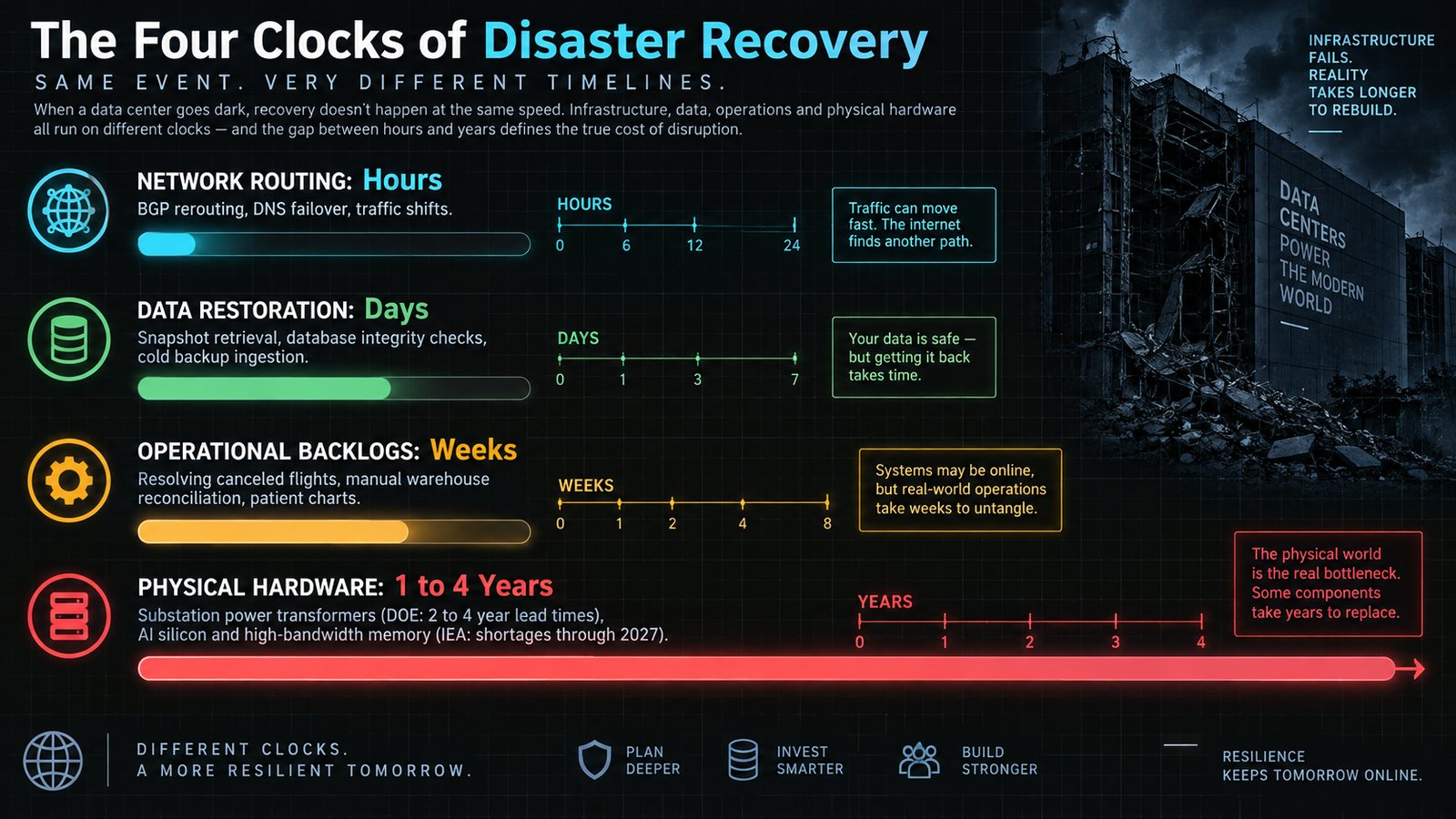
Recovery is not one clock; it is four separate ones: restoring network connectivity, verifying corrupted data, clearing human backlogs, and physically rebuilding lost capacity.
That last clock is terrifyingly slow. In a March 2026 presentation, the Department of Energy noted that lead times for power transformers were running one to two years for standard distribution units, reaching four years for large substation transformers.
The International Energy Agency’s April 2026 report warned of tightening bottlenecks in power equipment and chip manufacturing, projecting high-bandwidth memory shortages through at least 2027. If an adversary destroys a major data center tomorrow, replacement hardware has to compete against an already choked market.
Cloud providers can route traffic, but routing requests does not manufacture silicon. On its July 2026 earnings call, Microsoft admitted cloud demand still outpaced available capacity. We have no idea how much true reserve capacity exists behind the curtain.
Foreign policy does not stop at the water’s edge#
This vulnerability does not exist in a vacuum. Trump’s second term has embraced confrontation: launching strikes on Iran, running a military raid into Venezuela to seize Nicolás Maduro, threatening cross-border strikes inside Mexico, using annexation rhetoric against Canada, and browbeating European allies over Greenland before dropping tariff threats in January 2026.
My objection is to a foreign policy that expands confrontation overseas while treating the domestic fallout as someone else’s problem. When you pick fights with the world, you invite adversaries to poke at your vulnerabilities.
That danger did not start with Trump. In February 2024, the National Security Agency warned that Chinese state-sponsored hackers were already positioning inside US critical infrastructure to disrupt civilian life during a crisis.
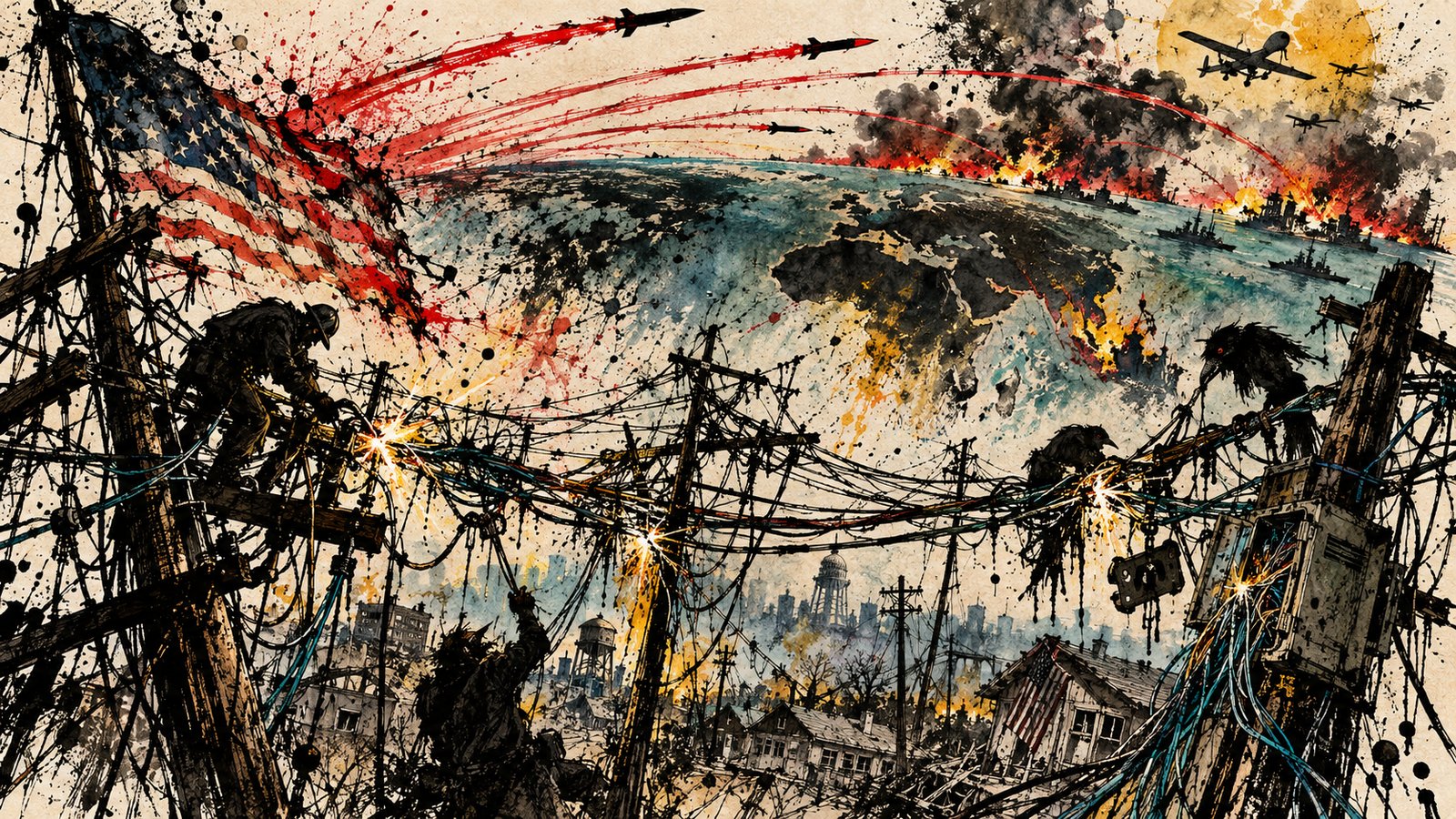
Adversaries do not need to guess how to hurt us. They just watched drones hit Russian servers and saw how fast services wobbled.
Give people the ability to keep going#
We need software that actually works where the user is sitting.
That means document tools that open files without calling an auth server, data systems that export clean records without administrative permission, and apps that keep functioning when the network dies. It means running local models on workstations and local servers when they are capable enough, instead of making every routine keystroke a round-trip to an API in Virginia.
The local-first software community has already outlined the approach: keep usable data and computation on the device, and sync when the network is available. Network collaboration is a great feature; it should never be a hostage situation.
Installing an app on your desktop is not enough. Most modern desktop apps are just web wrappers that freeze the moment their auth or licensing server goes dark. For critical civic services, public procurement should enforce one blunt test: What can your staff get done if this vendor disappears for a week? If the answer is “nothing,” you do not have a technology vendor; you have an operational crisis waiting to happen. Paper procedures, local records, and offline fallbacks are basic survival gear.
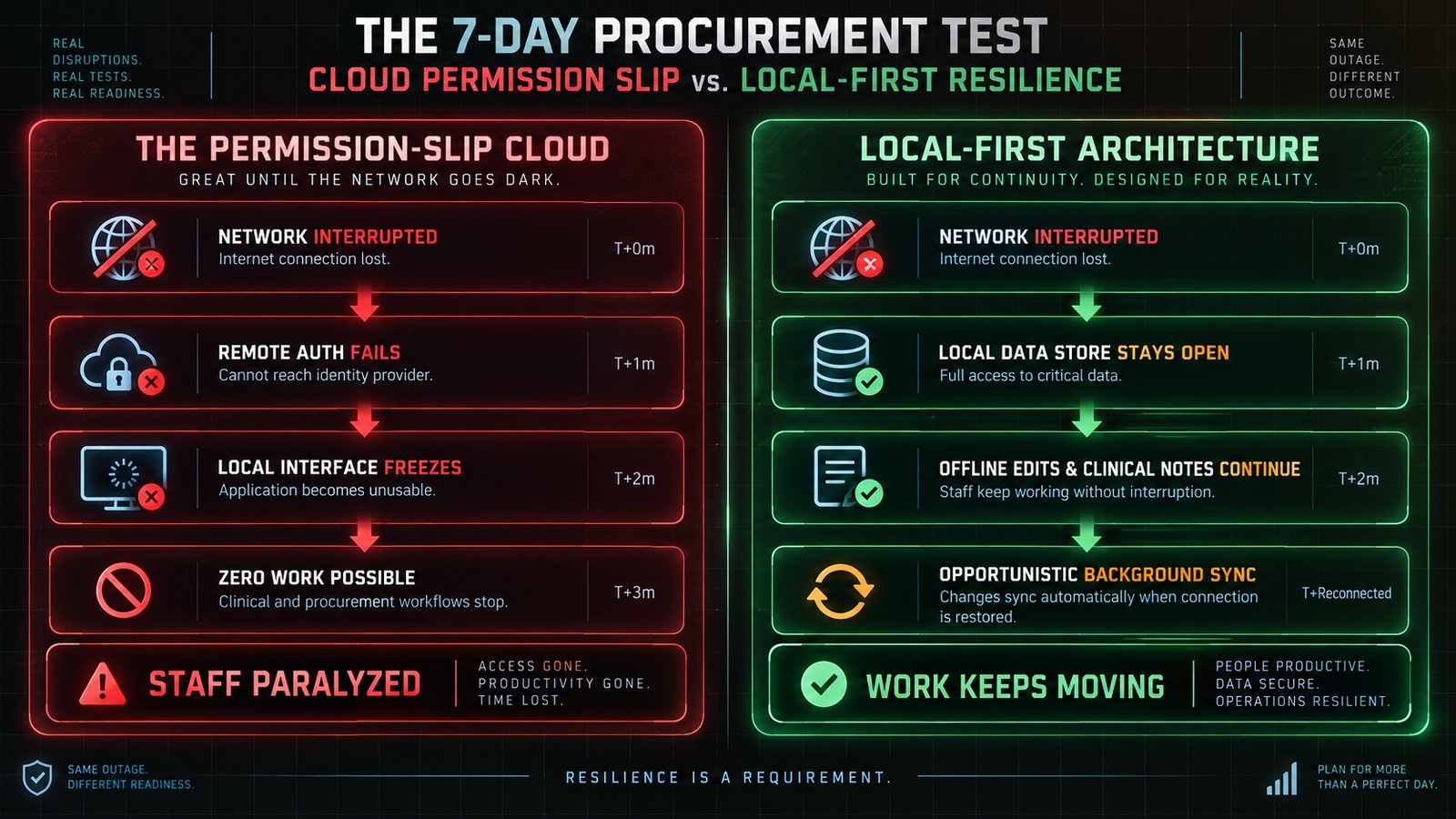
Local-first software will not route air traffic or replace 911 networks. But for everyday office work, clinical records, and local services, an app should let people read their files and keep working while synchronization waits. We have to stop making everyday tasks a permission slip to a distant server.
An America whose schools, clinics, and businesses can keep working through a digital disruption is much harder to intimidate. That is a national resilience goal worth spending money on.
We need an offline mode.