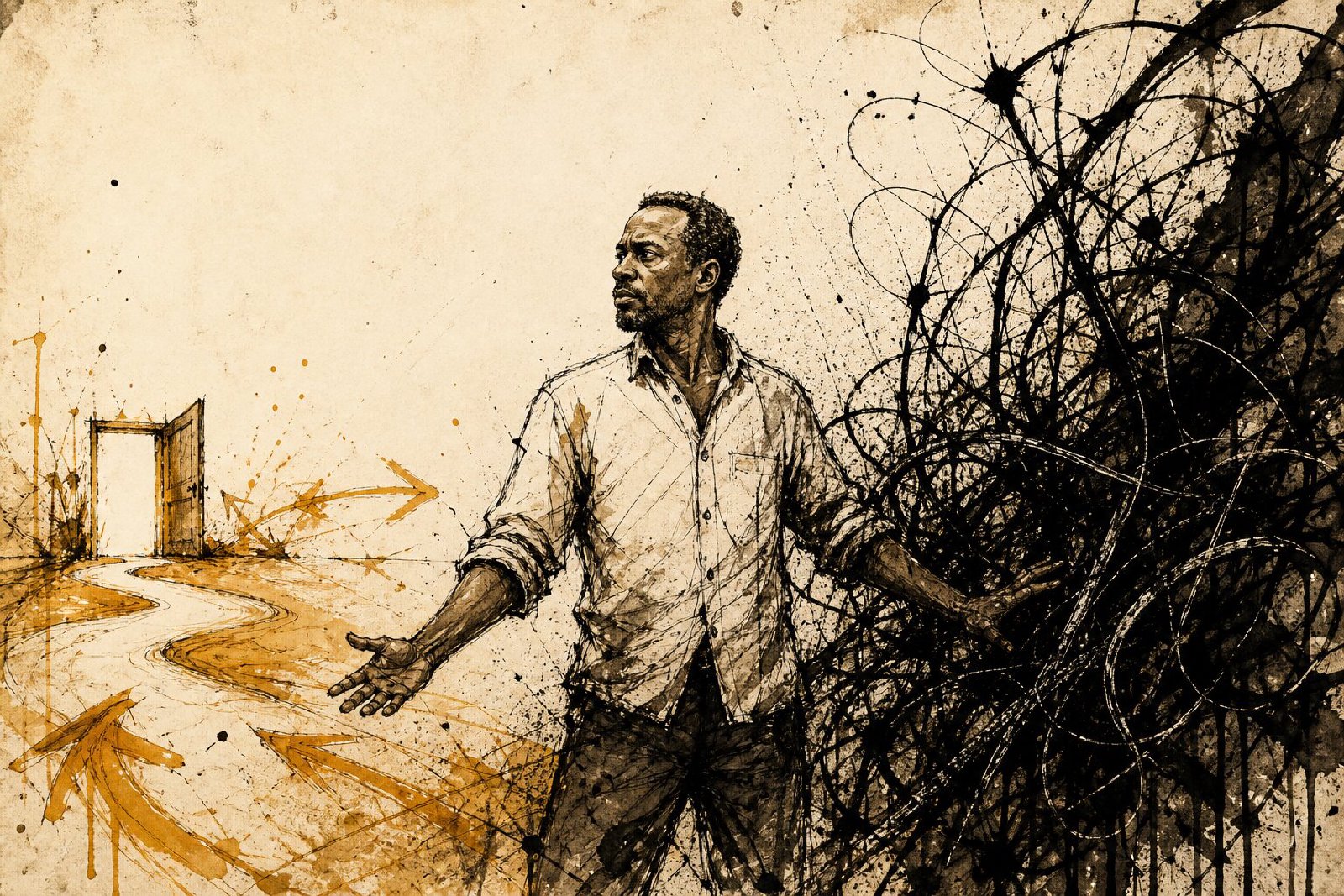
You know the feeling. The work that used to move in a week now needs several rounds of review. An email that once landed cleanly comes back with questions you did not have to answer before. You use the same judgment, the same habits, and the same effort, but the results keep getting weaker.
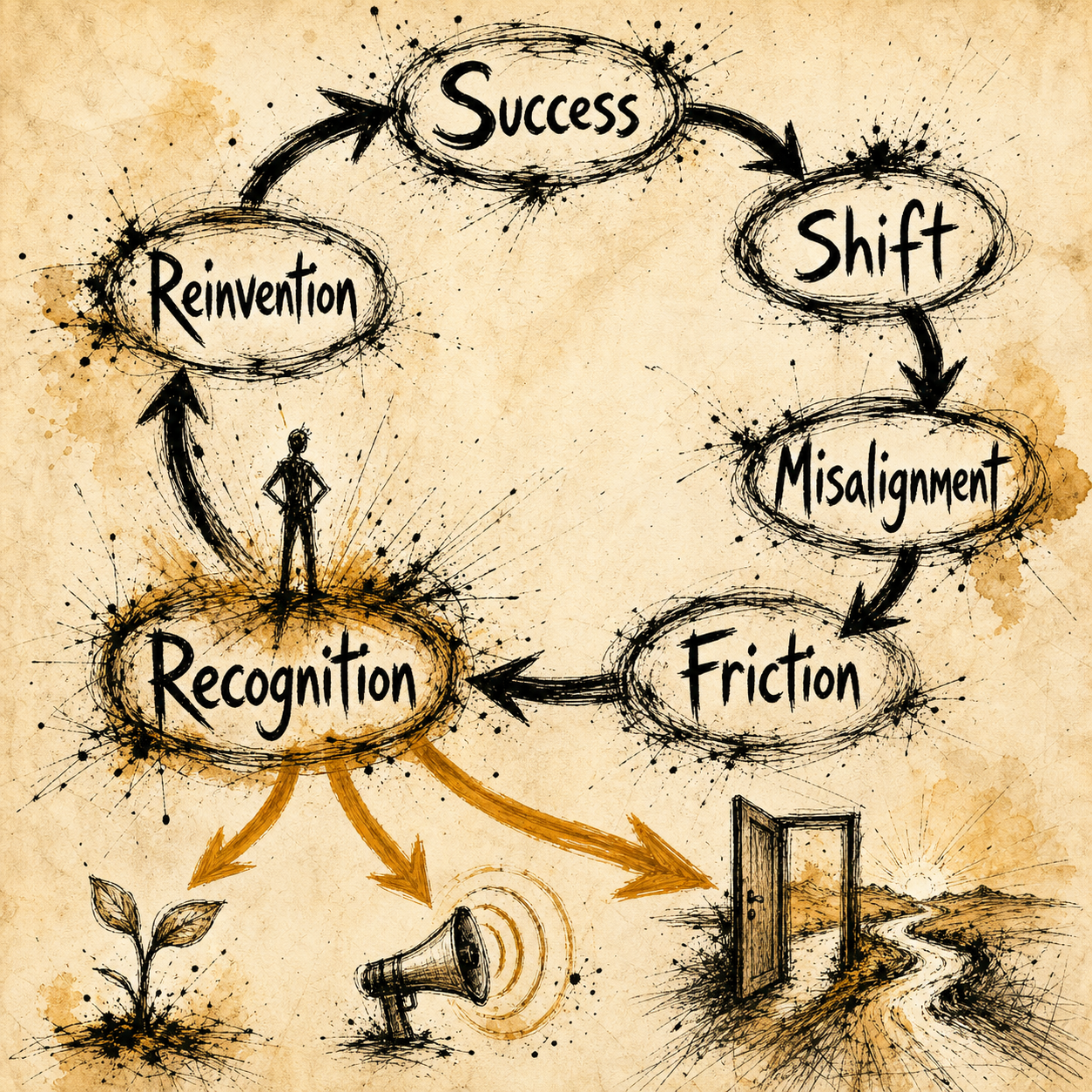
That was the ground Bill Reilly covered at AgileRTP’s September 1, 2026 event, “When Success Stops Working: Burnout or Friction?”, organized by Catherine Louis and Arjay Hinek. Reilly, an executive coach, gave that experience a name: friction. His Reinvention Cycle is an attempt to describe what happens when the person has not necessarily changed, but the environment around them has.
That distinction is useful because “burnout” is often the first word available. Take a vacation. Rest. Try harder. Be more resilient. Those responses may be appropriate, but they do not answer the more awkward question: what changed around you?
Reilly was careful to describe the Reinvention Cycle as a navigation model, not a clinical assessment or a scoring system. It gives people a way to talk about a mismatch before they turn it into a verdict about their own character.
The same person in a different organization#
Reilly opened with a story from his time at Cisco Meraki. On his first day, a product launch was waiting for quality assurance approval. He did not yet know the quality lead’s name, but he understood the responsibility. Without that approval, the launch would not proceed. He made the call and nobody challenged his authority to make it.
That early Meraki environment moved quickly and trusted his judgment. About two years later, Reilly was in a San Francisco hotel room wondering whether he still fit at the same company. There had been no single rupture. Projects that once received quick approval were returning for another look. More people needed to sign off. Conversations had moved from rapid growth toward forecasts, sustainability, and another layer of checking.
In Reilly’s account, both operating models had value. His instincts were still calibrated for the earlier one. He read the growing resistance as a personal problem and wondered what he had done wrong. The organization had matured while he continued to work from what he called his day-one version of himself.
That story supplied the talk’s central tension. A proven playbook can keep producing confidence after the conditions that made it effective have disappeared. Working harder inside that playbook may increase the strain.
Friction has energy in it#
Reilly’s distinction begins with energy. In his framework, friction still has energy, initiative, and ambition. The energy is blocked. A proposal gets rewritten again. An experienced leader adds more detail. A team increases effort but keeps meeting resistance from a system that now expects something different.
He described burnout as depletion. Energy has fallen, rest offers only limited relief and the effects have become harder to contain. That is where the limits of a workplace framework become important.
The World Health Organization describes burn-out in ICD-11 as an occupational phenomenon, rather than a medical condition, resulting from chronic workplace stress that has not been successfully managed. Reilly’s friction distinction is not part of that definition. His cycle should not be used to diagnose burnout or to minimize serious symptoms. Serious burnout may require support from a qualified health or mental-health professional. A coaching framework cannot replace that care.
That caution does not erase the value of the earlier question. Reilly was asking whether some people and teams reach a recognizable alignment problem before they reach depletion. If energy remains but every familiar move meets resistance, rest alone may leave the source of that resistance untouched.
Six stages in the Reinvention Cycle#
Reilly organized the pattern into six stages. He presented them in sequence, with timing that varies by situation:
- Success. Skills, goals and the surrounding environment fit. Repeated results turn working habits into a reliable playbook.
- Shift. Something changes around the person: leadership, priorities, technology, or the shape of the team.
- Misalignment. Familiar inputs stop producing familiar outputs. What once looked like sound judgment may begin to look slow, resistant or ineffective.
- Friction. Energy remains, but it runs into the changed environment. The instinct to push harder can deepen the commitment to an outdated approach.
- Recognition. The changed pattern becomes visible. The problem can be examined as a relationship between the person and the environment rather than as a verdict on character.
- Reinvention. Reilly described three broad choices: adapt to the environment, influence its direction or leave it.
Reilly presented the sequence as a map with no formula or numerical score. Energy is subjective. Timing varies. Recognition can arrive quietly. Reinvention does not guarantee that every available choice will be easy.
Why high performers may feel the shift first#
Reilly argued that high performers can notice these changes early because much of their success comes from pattern recognition. Years of results teach which proposal will pass, which objection will appear and which decision can safely move ahead.
A shift changes the pattern before it changes the person’s confidence in the pattern. Strong instincts start to misfire. A leader who once seemed decisive may suddenly seem resistant after a reorganization. A contributor who knew exactly how to frame a proposal may keep adding work to an approach that no longer lands.
The leadership implication is practical: examine what changed around a high performer before turning a sudden change in results into a judgment about attitude or fit. Continued energy is not proof that everything is fine. In Reilly’s model, it may be the signal that useful effort is colliding with a new set of expectations.
This framing does not excuse poor behavior or make every performance problem an organizational failure. It widens the investigation to include the playbook and the changed environment. That wider investigation asks which new approval path, priority or leadership expectation appeared before the person’s results changed.
Teams can inherit an obsolete playbook#
Reilly was more tentative when he moved from individuals to teams. He said the framework had been developed for individuals and that he was beginning to extend it to team dynamics.
His team example followed the same mechanics. A team can succeed long enough for its roles, rituals and informal handoffs to harden around one operating environment. A new leader, a staffing change or a different delivery model can alter that environment. The team may still have capable people and plenty of effort, but practices built for the former organization begin creating drag.
Rest, a slower cadence, or a morale event may help exhausted people. Those measures do not identify a missing role or update a stale decision process. Reilly proposed two more specific questions for leaders: What changed around this team? Which practices were built for a version of the organization that no longer exists?
He also offered AI as an example of a force that can accelerate visible shifts in roles and expectations. Reilly presented that as an observation from his work, not a research finding. It connects with an argument I have made about human-first enterprise AI transformation: technology transformation changes work, authority and relationships along with the tools. Teams need space to renegotiate those things instead of carrying an old operating model into a new system.
Five questions that turn discomfort into a conversation#
The most immediately usable part of the talk was a set of five questions. Reilly framed them as pattern-finding prompts:
- What happens to energy at work? Is it low, blocked or flowing?
- What has changed around the person or team? The focus stays on the environment before turning inward.
- Is harder work producing the same or weaker results? Increased effort with less movement can expose a mismatch.
- What follows a person home from work? The question looks at whether work remains contained or keeps occupying attention after the workday.
- How would it feel if nothing changed for two years? The time horizon can make an accepted condition look different.
There is no scoring key. A pause does not produce a diagnosis. Reilly treats the question that creates hesitation as the place where a deeper conversation may need to begin.
The answers can also point in different directions. Blocked energy and a changed environment may suggest friction in Reilly’s framework. Low energy and serious impairment call for more care than a workplace conversation can provide. A team that still has energy but keeps fighting the same process may need operating changes rather than another demand for resilience.
The gap between success and fit#
Reilly’s first-day decision at Meraki and his later doubt came from the same leader. Between those moments, proposals gained layers, priorities shifted and the organization’s definition of sound execution changed. In his telling, the difference was the operating environment, not a sudden loss of ability.
The most useful part of the talk was not a promise that every difficult job can be rescued. It was the invitation to look more closely before deciding that the person is the problem.
That is a question I recognize from the work I have done around teams and transformation. When the environment changes, people are often asked to absorb the change privately. Their tools change, their decision paths change, and the definition of “good work” changes, but the organization still evaluates them against the old picture. Then somebody calls the resulting struggle a performance problem.
Reilly’s model gives that moment somewhere else to go. Look at the person, yes. Also look at the system that person is trying to navigate.