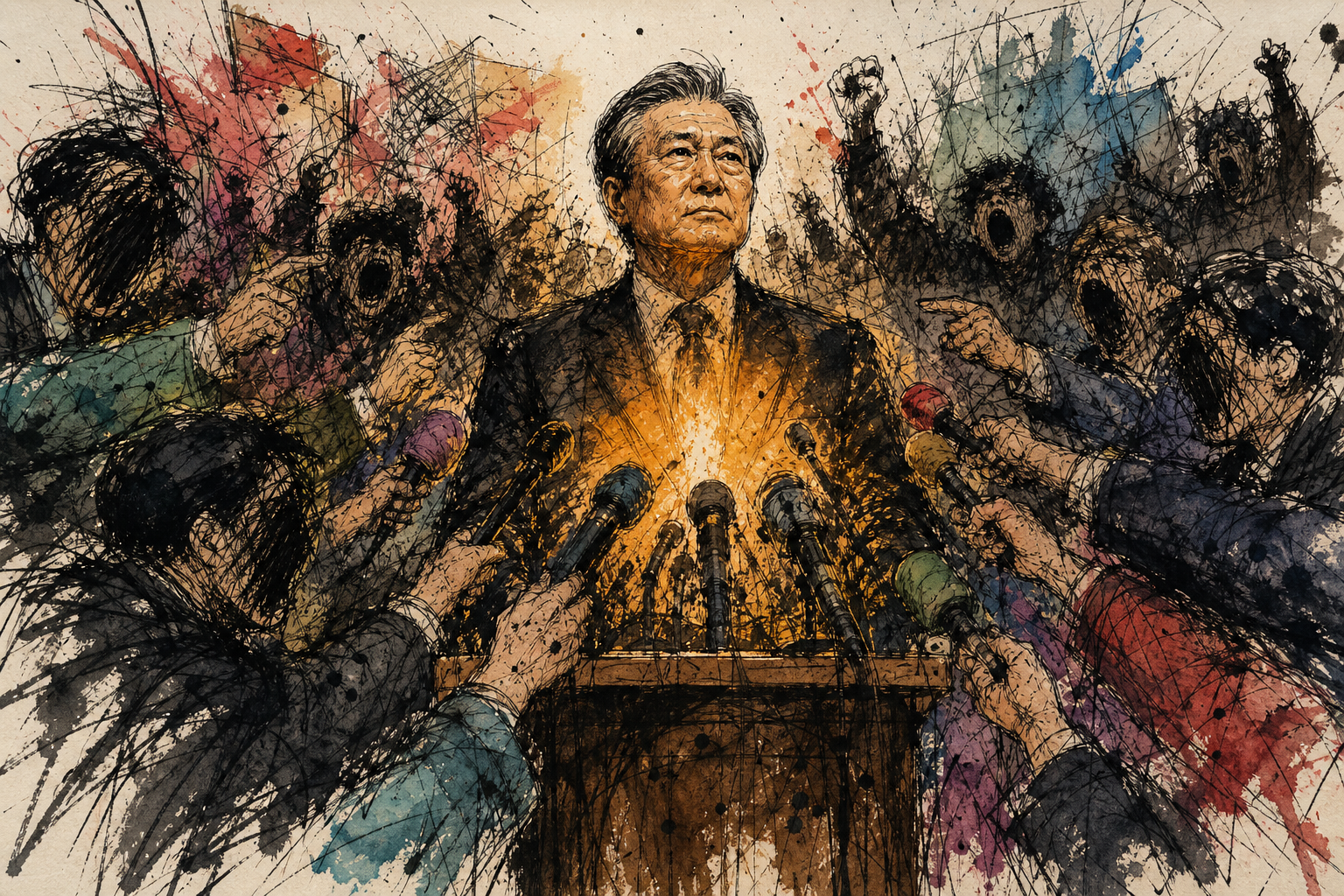
South Korea’s top policy adviser posted something on Facebook this week, and the stock market dropped 5 percent in response.
The Western coverage was mostly a Bloomberg wire about the market panic. The Korean domestic coverage told a much richer story. There’s a reason for that gap, and it’s worth naming: language barriers still shape what counts as “news” in an English-first media ecosystem. But modern AI tools make finding and reading local-language coverage trivially easy. What would have taken a translator and days of legwork a few years ago is now a few prompts away. The local coverage is almost always more interesting.
Kim Yong-beom, presidential chief of staff for policy, suggested the government should design a mechanism to return some AI-driven tax revenue to citizens. Nothing was proposed, let alone legislated. But the market read it as a threat to Samsung and SK Hynix profits and sold first, asked questions later. The KOSPI plunged over 5 percent intraday before recovering some ground. By the close it was down 2.3 percent, its first losing session in six.
It’s a shame, because buried under the market panic and the predictable political backlash is an argument worth pulling apart. It comes in two parts, and neither is what the headlines suggested.
Part one: AI profits concentrate by nature
Kim’s core observation is structural, not ideological. “Excess profits in the AI era are, by nature, concentrated,” he wrote. Memory chip companies, their core engineers, and capital asset holders capture the bulk of the gains. The middle class gets indirect effects at best: a firmer currency, modest fiscal transfers, some asset appreciation.
This one’s hard to argue with. Samsung and SK Hynix basically have a duopoly on the high-bandwidth memory every AI data center needs. The barriers to entry in advanced semiconductor manufacturing run to billions of dollars and decades of engineering. The returns from that position don’t distribute by merit across the population. They get captured by whoever holds the scarce assets.
Kim’s framing matters here. He didn’t say “companies are making too much money.” He said the structure of the AI economy channels returns to a narrow set of actors by default, and you have to design for a different outcome if you want one. That’s a descriptive claim, not a prescriptive one. You can disagree with the policy without disputing the observation.
Part two: AI is the new oil
The more interesting move is what Kim reached for as a model. He invoked Norway’s sovereign wealth fund.
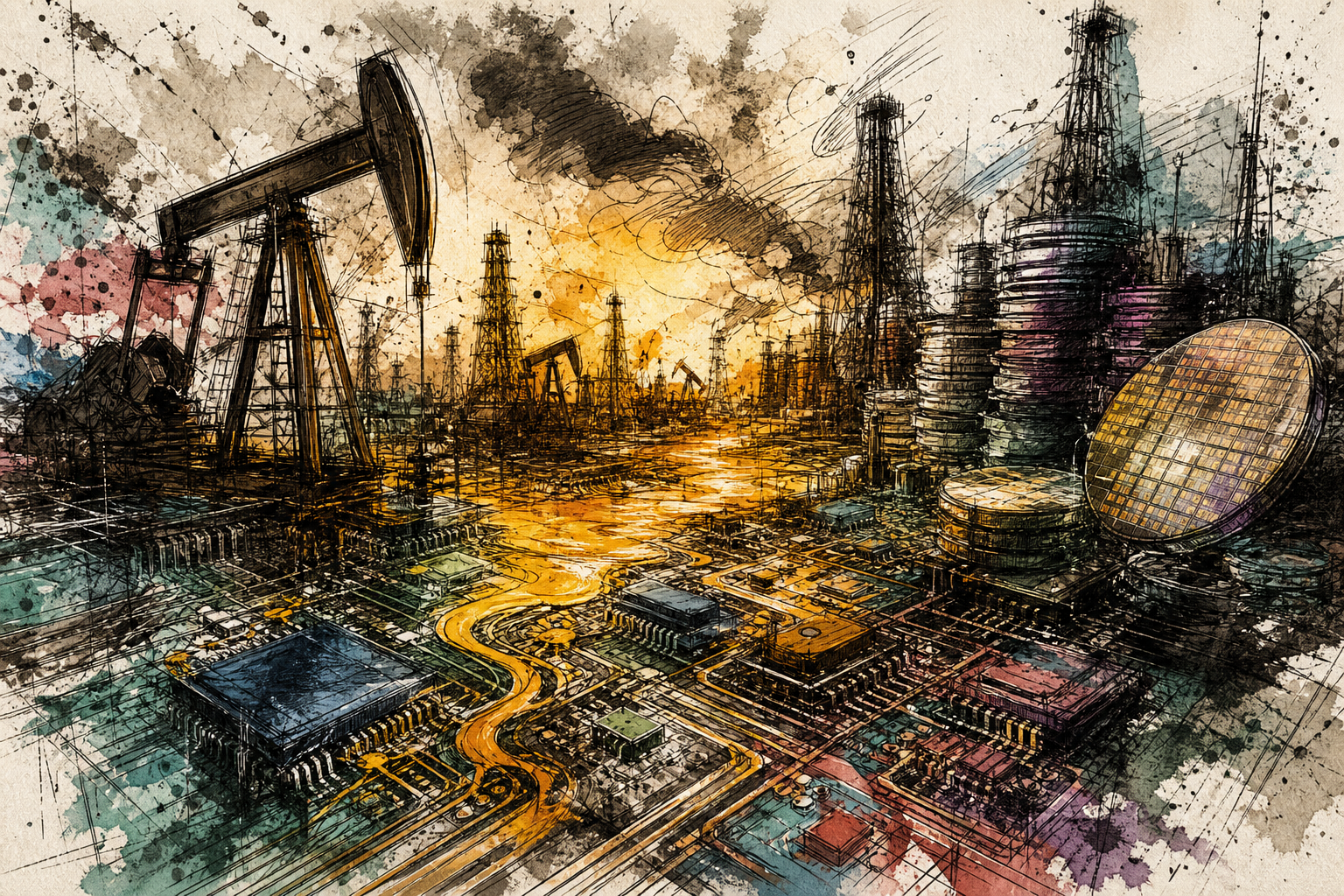
Norway spent the 1990s figuring out what to do with North Sea oil revenue. The decision they landed on was to treat oil as a national endowment rather than a revenue stream. Put the proceeds into a sovereign wealth fund, invest globally, use the returns to benefit everyone. Today that fund is worth over $1.7 trillion. No Norwegian politician calls this socialism. They call it stewardship.
Kim’s analogy is that South Korea’s position in the AI supply chain functions like a national resource. It wasn’t built by Samsung and SK Hynix alone. It was built on five decades of industrial policy, public education, infrastructure, and a society that prioritized manufacturing excellence. The companies did the work, but the foundation was collectively constructed.
“AI infrastructure era fruits are not the result of any single company alone,” Kim wrote. “They are built on an industrial foundation accumulated collectively by the Korean people over the past half century.”
This is a genuinely different argument from the usual UBI advocacy or windfall tax talk. It isn’t about charity or redistribution. It’s about recognizing that some AI-era profits are economic rents from a structurally advantaged position, and asking what a society owes itself when its collective investments create extraordinary returns for a few.
The question worth asking
The specific proposal Kim floated may go nowhere. The president distanced himself from it within 24 hours. The opposition called it communism. The market convulsed at the mere suggestion.
But the underlying questions aren’t going away. If AI profits are structurally concentrated, how should a society respond? If the foundation those profits rest on was collectively built, does the public have a legitimate claim to some of the return? And if the answer is yes, what institutions could manage that claim without breaking the mechanisms that produce the profits in the first place?
Norway answered those questions for oil thirty years ago. South Korea is asking them for AI right now. The rest of us should be paying attention, because we’ll be asking them too.